About The Books
About The Books
WISDOM THROUGH youth
Leadership from the Eyes of a 19-Year-Old
What if the way you’ve been taught to live is the reason you feel stuck?
Wisdom Through Youth is not a textbook on leadership. It isn’t written by a professor, a certified coach, or a psychologist with thirty years of clinical experience. It’s written by a nineteen-year-old who just stepped out of childhood with her memories still fresh, her perspective still close to the ground, and a deep conviction that the people shaping the next generation deserve to hear from someone who was just there.
The book explores three levels of leadership: leading yourself, leading others, and understanding how leadership operates within larger systems like schools, sports teams, and families. At its core, it argues that real leadership begins with character — and character has to be built from the inside before it can be given to anyone else.

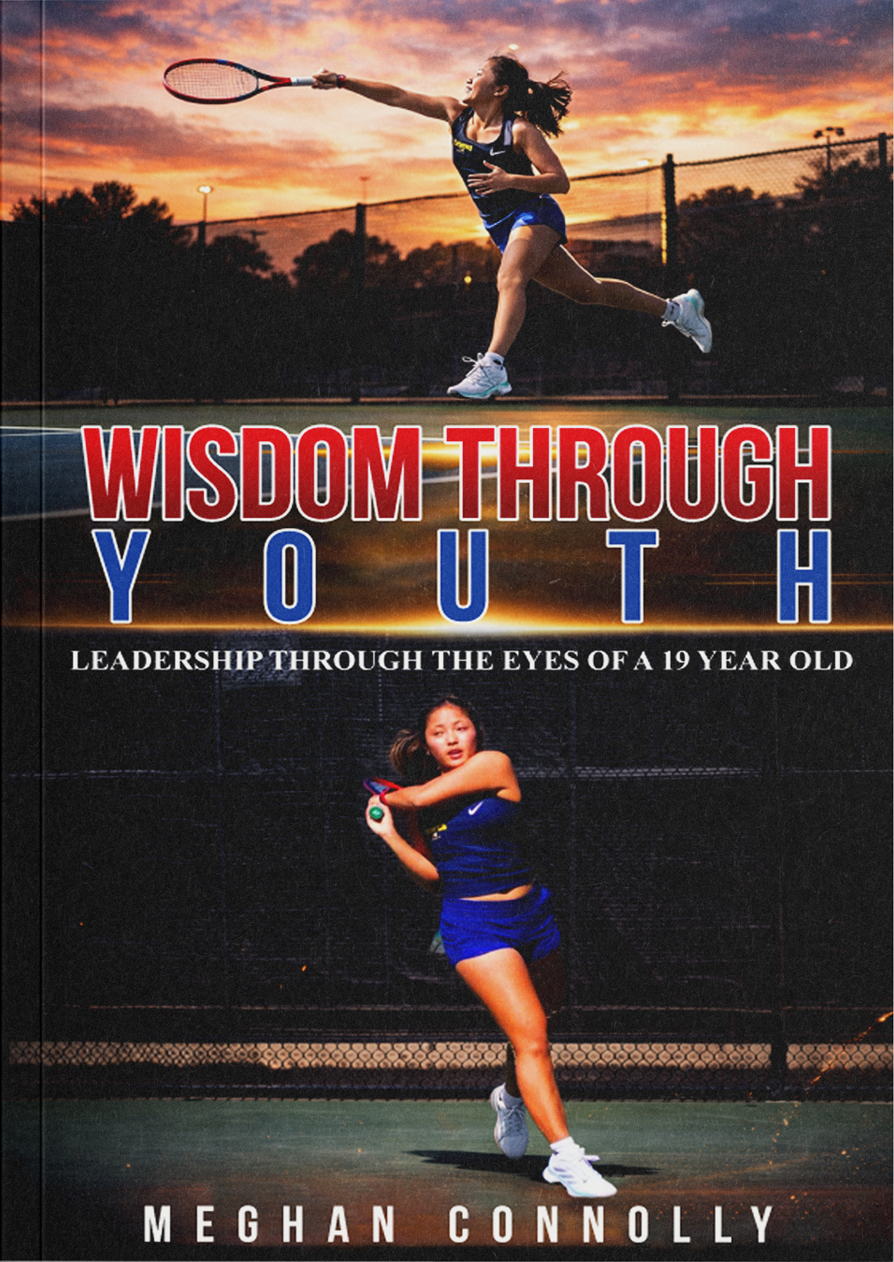
Across seven chapters, Meghan draws on her real experiences as a student, athlete, daughter, and young adult to examine how adults in positions of authority — parents, teachers, coaches — either build up or quietly damage the young people in their care. She writes about what it felt like to have a toxic coach almost destroy her love of tennis. She writes about an education system that punished curiosity while praising compliance. She writes about losing her mother at fifteen and the kind of strength that kind of grief forces you to find. And she writes about the three principles she keeps coming back to: respect the truth, live with balance, and think for yourself.
This is not a book with all the answers. It’s a book that asks honest questions — the kind most adults have stopped asking because they got comfortable. It challenges the belief that wisdom only comes with age, that authority deserves automatic respect, and that the rules young people are handed are always the right ones to follow.
Whether you’re a parent trying to stay connected to your teenager, a coach who wants to understand your athletes, a teacher looking for a perspective that actually reflects the students in front of you, or a young person who has ever felt misunderstood — this book was written with you in mind.
WHAT THE BOOK COVERS — Chapter-by-Chapter Overview
Introduction — Finding My Perspective
Meghan introduces herself, explains why she wrote the book at nineteen, and sets the tone for everything that follows. She describes her childhood, her parents, the sports she played, and the mindset she was raised with. She also addresses the question she knew people would ask: what right does a teenager have to give advice to adults? Her answer: a fresher perspective than most.
Chapter 1 — Focus on Yourself
This chapter digs into what it actually means to grow up — not just legally, but internally. Meghan explores the three layers of self-development: self-awareness, self-acceptance, and self-leadership. She shares research on why most people believe they’re self-aware when they actually aren’t, and explains why learning to focus on yourself first is the foundation for every other kind of growth.
Chapter 2 — The 3 Things to Being a Well-Rounded and Independent Individual
The three principles Meghan lives by: respect the truth, live with balance, and think for yourself. She unpacks why honesty is actually a form of self-security, how balance applies to everything from ambition to relationships to priorities, and why thinking for yourself is the most important — and most underrated — skill anyone can develop.
Chapter 3 — Lessons from Mom
A deeply personal chapter about Meghan’s relationship with her mother — a woman who modeled self-confidence, boldness, and leadership right up until she passed away from breast cancer. Meghan writes about what her mom taught her about identity, pressure, gender expectations, and what it looks like to lead from a place of genuine inner security.
Chapter 4 — Character Development from Dad
Meghan’s father is fifty-seven years older than her, and this chapter explores what that age gap taught her about humility, self-sufficiency, manners, and respect. She also discusses what it means to earn respect versus demand it — a lesson she learned from coaches who failed to understand the difference.
Chapter 5 — Look at the Big Picture
One of the most important skills Meghan learned: the ability to step back before reacting. This chapter examines how most conflict, unfairness, and misunderstanding comes from people only seeing their own side of a situation. She applies this principle to parenting, coaching, teaching, and her own experience of being consistently misunderstood because of how young she looks and how energetically she carries herself.
Chapter 6 — Harsh Truths About Life
A chapter that doesn’t flinch. Meghan walks through ten uncomfortable truths she’s had to accept: that people respect achievement more than character, that not everyone who is supposed to guide you will actually help you, that hard work doesn’t always get recognized, and that growth almost always means losing people along the way. Backed by psychology research and lived experience, this is one of the most honest sections of the book.
Chapter 7 — What Turns Boys Into Men and What Turns Girls Into Women
The final chapter explores emotional maturity, the double standards young people face, the freedom of holding onto your inner child, and what real adulthood actually looks like when you strip away the performance of it. Meghan examines how gender expectations shape the way young people are coached, taught, and judged — and makes the case that maturity is never about age. It’s about accountability.
WHO IS THIS BOOK FOR? — Audience Section
This book is for you if…
- You’re a parent who wants to understand your teenager better without losing the relationship in the process
- You’re a coach or teacher who cares about your athletes and students beyond just results
- You’re a young adult who has ever felt dismissed, misunderstood, or like you were ahead of the people around you emotionally
- You’ve ever questioned whether the systems you were raised in — school, sports, family dynamics — were actually designed to help you grow
- You believe leadership starts with character and you’re tired of reading leadership books that forgot what it feels like to be on the other side
KEY QUOTES FROM THE BOOK — For Pull-quotes or Highlights
- “The most powerful person in a room is one with the most self-control over oneself and the ability to not rely on anyone — whether that be emotionally, financially, or self-accountability.”
- “One’s greatest achievement is being the best version of yourself in a world trying to change you, and being able to live life on your own terms.”
- “Age does not always mean wisdom. Even a fool can grow old. One must choose to grow.”
- “Being right doesn’t always mean being respected. And being respected isn’t about age — it’s about how people choose to perceive you.”
- “If you have a dream or idea that you believe can help the world, don’t let reality, school, your parents, or anyone else tell you what’s possible or impossible.”
- “Before you bring a child into the world, ask yourself — do you have enough peace, love, and stability within yourself to give them what they deserve?”